GREY SPACE THERAPY
Breaking the Stigma to Men’s Mental Health
Therapy for Men
TAKE CONTROL OF YOUR MENTAL HEALTH TODAY AND START LIVING THE LIFE YOU WANT
Work Stress
Burnout
Self-Esteem and Confidence
Relationship Breakups
Attachment Relationship Struggles
Depression/ Grief
Anxiety
Substance Abuse
Difficulty Communicating Needs
Childhood Trauma
Our Specialties:
Men’s Mental Health
Common Mental Health Symptoms for Men:
Irritability.
Shutting down.
Aggression or Anger Issues
Numbness
Substance Abuse
Fatigue & Low Motivation
Concentration Issues
Ruminating
Feeling resentment towards others
Physical Symptoms: headaches, stomach issues, tension
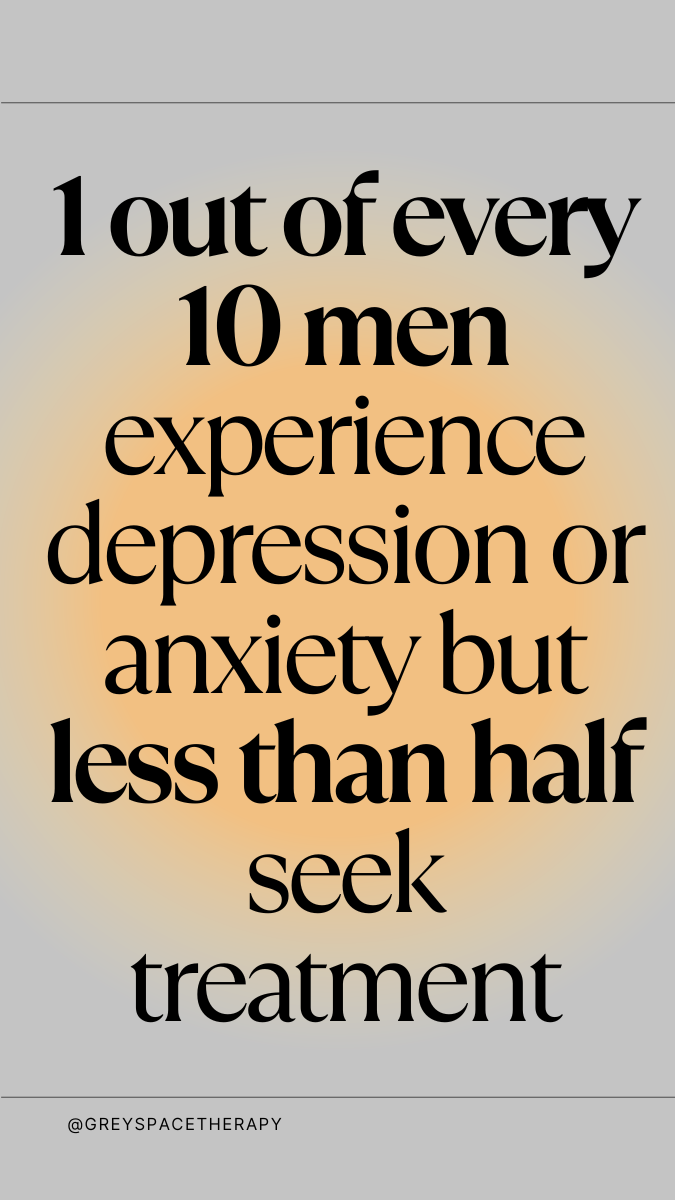
Mental health struggles often show different in men compared to women. Many men do not feel comfortable sharing their feelings such as sadness, depression, worry or fear. Common mental health symptoms for men include:
FIND A THERAPIST NEAR YOU
What to Expect in Therapy:
Often times men do not feel comfortable to express their feelings and emotions to loved ones. Therapy will create a safe space for you to process and identify your emotions. Therapy allows men to discuss their struggles without judgment. Together we will learn where this behavior or ideas were developed.
Therapy is a process of identifying what is no longer working for us and getting answers so we can create the life we want.
Signs Therapy is Working:
Therapist often get asked by clients “when will I know therapy is working?”.
Although this is a complex question below are some signs to look for that reassure you are on the right direction:
You feel comfortable and safe with your therapist
You are learning about your triggers and how to regulate when activated
You notice improvements in your mood including being more hopeful and empathetic towards yourself and others.
You can identify your emotions and communicate boundaries and needs to others
You have learned skills to help you care for yourself as needed.